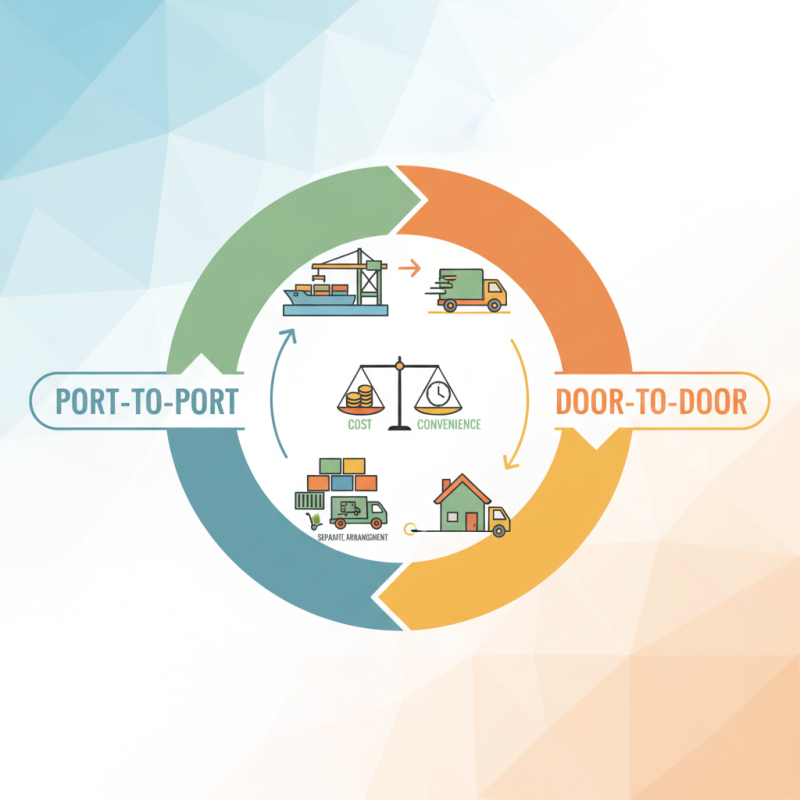
When businesses consider shipping options, a common question arises: "what is the difference between port-to-port and door-to-door transport?" According to logistics expert, Johnathan Green, "The choice between these methods depends heavily on convenience and cost." His insight highlights the complexities involved in selecting the right transport option.
Port-to-port transport typically involves the shipment being handled only from one port to another. This option may cost less, making it appealing for budget-conscious companies. However, it requires additional arrangements for pick-up and delivery at both ends, which can complicate logistics. On the other hand, door-to-door service offers a seamless experience. It transports goods directly from the shipper to the receiver's address. This method might come at a higher price but saves time and reduces hassle.
Understanding the nuances of these transport methods is crucial. Each option has unique benefits and drawbacks. Businesses must evaluate their specific needs and resources. Ultimately, it may come down to balancing cost versus convenience. The decision can significantly affect efficiency and final delivery timelines.
Port-to-Port Transport: Definition and Overview
Port-to-port transport refers to the method of shipping goods between two ports. This option simplifies logistics by focusing solely on the transfer of freight. Businesses can easily arrange for transport once the goods arrive at the destination port. This straightforward process can significantly reduce costs and transit times. However, it also leaves the responsibility for inland transportation to the recipient.
This transport method presents clear advantages. It provides flexibility and can cater to various shipping needs. Ports are often located in strategic locations, facilitating faster access to international markets. Yet, it might pose challenges. Companies must account for additional logistics and potential delays in the last-mile delivery. Sprawling distances between ports and final destinations can lead to unforeseen complications. In some cases, relying purely on port-to-port transport could disrupt supply chains.
Choosing port-to-port transport is a strategic decision. Its simplicity appeals to many businesses. However, thorough planning is crucial. Understanding the limitations and extra responsibilities is vital for seamless logistics. Ultimately, companies must weigh the benefits against potential hurdles to find the right transport solution for their needs.
Door-to-Door Transport: Understanding the Concept
Door-to-door transport refers to the seamless movement of goods from the shipper's location straight to the receiver's destination. This service offers convenience, as it minimizes the need for clients to manage multiple logistics providers. A 2022 industry report showed that 75% of customers prefer this option for its ease of use and efficiency.
In choosing door-to-door services, consider the extent of costs. While this option may seem more expensive upfront, it could save time and reduce hidden charges associated with port-to-port transport. Notably, timely delivery improves customer satisfaction, as studies indicate that 78% of consumers are willing to pay more for improved service.
**Tip:** Always compare quotes. Different providers may have varying rates for door-to-door services. Conduct thorough research to avoid unexpected expenses.
The inherent complexities of logistics can lead to misunderstandings. Not every provider offers the same transparency. Whether it’s tracking or support, lack of clarity can frustrate customers. It's essential to ask the right questions and ensure your service provider meets your specific needs. **Tip:** Don’t hesitate to reach out for clarification before committing to a service.
Why Choose Port-to-Port or Door-to-Door Transport Options?
| Transport Option |
Definition |
Advantages |
Disadvantages |
| Port-to-Port |
Transport of goods from one port to another |
Cost-effective for large quantities, streamlined for freight operations |
Requires additional transportation to/from port, potential delays |
| Door-to-Door |
Complete transport service from sender's door to recipient's door |
Convenient, less hassle for sender and recipient, end-to-end service |
Generally more expensive, may involve multiple transport modes |
| Cost Comparison |
Difference in pricing strategy for each transport method |
Port-to-Port can save on large shipments |
Door-to-Door may offer better value for smaller shipments |
| Time Efficiency |
Speed of delivery measured in days |
Door-to-Door generally faster from end to end |
Port-to-Port may result in longer delivery times due to transfers |
Comparative Analysis of Port-to-Port vs. Door-to-Door Transport
When considering transport options,
port-to-port
and
door-to-door services
offer distinct advantages and challenges.
Port-to-port shipping is often more cost-effective for large shipments.
According to data from the International Maritime Organization, this method typically incurs lower freight costs,
especially for bulky goods. However, it requires additional logistics management once the cargo arrives at the port.
Companies report increased delays and complexities in customs clearance, which can negate savings.
On the other hand,
door-to-door transport
simplifies the shipping process. A study by the Global Logistics Research Group indicates that around
70% of businesses prefer this option for its convenience. It provides a seamless delivery experience,
essential for time-sensitive shipments. Yet, this service can be pricier.
Companies need to weigh the convenience against the higher costs. Furthermore, local delivery logistics can sometimes lead to unforeseen delays,
causing frustration. The choice between these methods demands careful consideration of factors like cost, speed, and potential risks.
Benefits of Choosing Port-to-Port Transport Options
Port-to-port transport presents several undeniable advantages. This method allows for
precise control over the logistics of moving goods from one port to another. It enables businesses to focus on crucial
elements like shipping schedules. Every port operates under specific timelines and regulations. Knowing these helps
in strategic planning.
Cost-effectiveness is another highlight.
By selecting port-to-port, businesses can avoid extra fees associated with door-to-door transport. This choice can
significantly lower the total shipping costs. Yet, there’s an ongoing challenge: the need for reliable inland transportation
after the port. Firms must ensure a seamless process from dock to destination. Failure to plan
can disrupt the entire supply chain.
Additionally, port-to-port transport can enhance security. Goods remain in monitored environments during transit.
However, risks exist. Ports can be congested and prone to delays. A thorough understanding of port operations can mitigate
this. Engaging with experts in the field is essential for navigating these complexities. Companies must weigh all the factors carefully.
Advantages of Opting for Door-to-Door Transport Services
When it comes to transport options, Door-to-Door services stand out. This method offers convenience and reliability. Instead of worrying about logistics, you can enjoy a streamlined process. The cargo moves from the shipper's location directly to the receiver. This eliminates the need for multiple arrangements.
One clear benefit is time-saving. With Door-to-Door services, you avoid delays often seen in port-to-port transport. The coordination is simpler. Your team saves hours they could spend on other tasks. Yet, not every situation suits this method. It’s essential to evaluate your unique needs carefully.
Tips: Consider the distance between locations. Shorter distances benefit more from Door-to-Door. Also, assess the nature of your cargo. Fragile items need extra care, which this service provides. It's worth noting some companies may lack the necessary infrastructure. Always research and confirm their capabilities beforehand. Choose wisely to avoid issues later.
Comparison of Port-to-Port and Door-to-Door Transport Options
This chart compares two shipping options: Port-to-Port and Door-to-Door transport services. Each factor is rated on a scale of 0 to 100, showing the advantages of choosing Door-to-Door transport in terms of convenience, speed, and tracking capabilities while also illustrating the cost and insurance considerations in both options.
Conclusion
When considering shipping options, one might ask, "what is the difference between port-to-port and door-to-door transport?" Port-to-port transport involves the delivery of goods between two ports, where the responsibility of the shipper typically ends once the cargo reaches its destination port. Conversely, door-to-door transport includes the entire journey from the sender's location directly to the recipient's address, providing a seamless service that covers all logistics, including handling, customs clearance, and final delivery.
Each option presents its own set of benefits. Port-to-port transport is often more cost-effective for larger shipments and is favored for international trade where distances are significant. On the other hand, door-to-door transport offers convenience and time-efficiency, making it ideal for businesses that require a streamlined process and that value having their shipments delivered directly to their facility. Understanding these distinctions helps businesses make informed decisions based on their logistical needs.

 LoJo Logistics