How to Choose Air or Sea Freight for Global Cargo?

Time:2026-10-20 Author:Mason
0%

Choosing the right freight mode can shape a shipment’s cost, delivery promise, and customer experience. This decision deserves more than a simple price comparison. The central question is how to choose between air transport and sea transport for cargo when urgency, budget, cargo value, and route reliability compete.

Dr. Jean-Paul Rodrigue, a respected transportation geography expert, describes transport as “a derived demand.” In other words, freight movement exists because businesses need products in specific places. Air freight suits urgent shipments, high-value goods, seasonal products, and compact cargo. A pallet of medical equipment may reach its destination within days by air. Sea freight usually fits heavier, larger, and less time-sensitive shipments. A container of furniture or industrial parts can travel economically across oceans, though transit may take several weeks.

The practical choice begins with the delivery deadline. Then examine weight, volume, packaging needs, insurance, port access, fuel surcharges, and destination handling. Do not ignore reliability. A cheap ocean rate may lose its advantage when delays disrupt production. Air freight can protect a launch date, but its higher cost may weaken margins. The neat answer is not always neat.

Experienced logistics teams often compare total landed cost, not only the freight invoice. They also review seasonal congestion and schedule changes. Sustainability matters, too. Air transport generally creates higher emissions per kilogram than ocean transport. Still, selecting sea freight without checking inventory risks can become an expensive mistake. This guide offers a practical framework, while recognizing that every cargo plan has limits, assumptions, and room for better judgment.
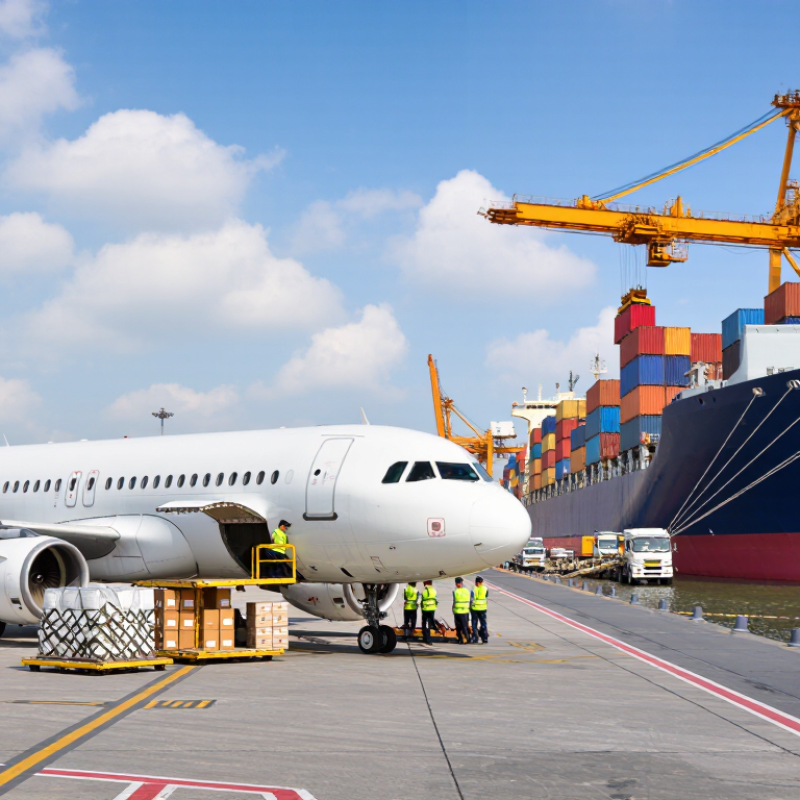
How to Choose Air or Sea Freight for Global Cargo?

Understanding Air and Sea Freight Fundamentals

How to Choose Air or Sea Freight for Global Cargo?

Air and sea freight serve different cargo fundamentals. Air freight prioritizes speed, schedule stability, and high-value goods. Sea freight emphasizes capacity, lower unit costs, and slower movement. A pallet leaving a factory today may reach an airport within hours, but port delivery can involve several handling stages. Temperature, packaging strength, customs preparation, and final-mile access also affect the real transit time.

Industry data shows the scale difference clearly. The International Air Transport Association reported approximately 58.8 million tonnes of air cargo in 2023. Air freight also carried about 35% of global trade value, despite representing less than 1% of trade volume. By contrast, UNCTAD’s Review of Maritime Transport 2024 recorded roughly 12.3 billion tonnes of seaborne trade in 2023. Sea freight handles the world’s heavy, bulky cargo.

The choice should begin with cargo risk, not habit. Use air transport for urgent components, seasonal products, or goods losing value each day. Use sea transport for furniture, machinery, and replenishment stock with flexible delivery dates. Calculate inventory cost, insurance, port fees, fuel adjustments, and inland trucking. A low ocean rate can become expensive when storage delays occur. I have seen teams focus too heavily on freight quotes. That is a mistake. Delivery reliability may matter more than the invoice. Not always. A mixed plan can reduce pressure: send critical units by air and the remaining volume by sea. Forecasts can still fail, especially during peak seasons.

Comparing Transit Speed, Capacity, and Service Coverage

How to Choose Air or Sea Freight for Global Cargo?

Air freight is usually the stronger choice when transit speed matters most. Typical airport-to-airport movement may take two to seven days. However, customs checks, flight schedules, and inland delivery can extend that window. I once planned a five-day shipment that arrived after eight days. The missing detail was a remote final-mile route. Air cargo also suits compact, valuable, or time-sensitive goods. Its capacity is limited, especially for oversized pallets. Service coverage can be broad, but smaller destinations may require extra connections.

Sea freight offers greater capacity and lower transport costs for large or heavy cargo. A full container can carry machinery, furniture, or many pallets in one movement. Transit often takes several weeks, depending on ports, vessel schedules, and inland transfers. Port coverage is extensive, yet the final delivery may need rail or trucking. This creates more handling points. Therefore, accurate packaging and clear cargo measurements are essential. A small volume calculation error can affect space planning and total cost.

Tips: Compare the complete door-to-door timeline, not only the main transport leg. Check airport and port access near both locations. Ask for confirmed cut-off dates and realistic delivery ranges. Keep a buffer for weather, congestion, and customs processing. Speed is not always the best value. Capacity is not always the cheapest option. My practical preference changes with urgency, cargo size, and delivery reliability.

Air freight typically delivers cargo in about 2 days with frequent departures, making it suitable for urgent and time-sensitive shipments. Sea freight commonly takes around 30 days but offers substantially higher shipment capacity and is generally more efficient for large, non-urgent cargo. Actual transit times and schedules vary by route, customs clearance, and port or airport conditions.

Evaluating Freight Costs and Total Logistics Expenses

Choosing air or sea freight requires more than comparing quoted transport rates. Sea freight usually wins for heavy, non-urgent cargo. The 2024 UNCTAD Review of Maritime Transport states that ships carry over 80% of global merchandise trade by volume. Yet a lower ocean rate can hide extra costs, including port handling, customs brokerage, storage, inland trucking, and demurrage. A container delayed for ten days can erase much of the apparent saving.

Air freight costs more per kilogram, but it reduces transit time and inventory exposure. The International Air Transport Association reports that air cargo represents about 35% of global trade value, despite carrying less than 1% of trade volume. This matters for electronics, seasonal products, and components that stop production when late. Calculate the total logistics expense, not only the freight invoice. Include working capital, insurance, packaging, warehouse rent, carbon charges, and the cost of missed sales. My experience suggests that companies often underestimate destination fees. That mistake is expensive.

Tips: Compare both modes using the same shipment weight, delivery terms, and route. Request itemized quotes. Add a realistic buffer for port congestion and customs inspections. Test a blended plan, such as sea freight for base stock and air freight for urgent replenishment. Review the result monthly; fuel prices, capacity, and exchange rates can change the calculation quickly. Forecasts are useful, but rarely perfect.

How to Choose Air or Sea Freight for Global Cargo? – Evaluating Freight Costs and Total Logistics Expenses

Indicative planning comparison for international general cargo. Costs are shown in USD and represent typical market ranges for non-hazardous cargo under standard commercial conditions.

Shipment Profile Typical Cargo Characteristics Air Freight: Transit Time Air Freight: Estimated Total Logistics Cost Sea Freight: Transit Time Sea Freight: Estimated Total Logistics Cost Key Cost Drivers Usually Preferred
Urgent replacement parts 100 kg; 0.60 m³; high stock-out risk; shipment value above average 2–5 days door to door USD 1,100–2,000
USD 11.00–20.00/kg
30–45 days door to door USD 550–950
USD 5.50–9.50/kg
Production downtime, expedited handling, customs priority, inventory carrying cost Air freight
Seasonal consumer goods 500 kg; 3.00 m³; fixed selling season; moderate cargo value 3–7 days door to door USD 3,800–6,500
USD 7.60–13.00/kg
28–42 days door to door USD 1,100–2,000
USD 2.20–4.00/kg
Seasonal markdown risk, warehousing, port charges, delivery appointment fees Sea freight when planned early
Standard replenishment cargo 1,000 kg; 6.00 m³; predictable demand; non-urgent inventory 3–7 days door to door USD 6,500–10,500
USD 6.50–10.50/kg
30–45 days door to door USD 1,400–2,500
USD 1.40–2.50/kg
Freight rate, container or consolidation fees, inventory financing, inland delivery Sea freight
High-value electronics 300 kg; 1.50 m³; high value-to-weight ratio; strict delivery schedule 2–6 days door to door USD 2,700–4,800
USD 9.00–16.00/kg
30–45 days door to door USD 800–1,500
USD 2.67–5.00/kg
Security, insurance, capital tied up in transit, product launch timing Air freight for time-critical orders
Bulky industrial equipment 5,000 kg; 20.00 m³; low-to-medium value density; specialized handling 5–10 days door to door USD 25,000–45,000
USD 5.00–9.00/kg
35–55 days door to door USD 4,500–9,000
USD 0.90–1.80/kg
Oversize handling, lifting equipment, export packing, port storage, inland haulage Sea freight
Full container load 15,000 kg; 30.00 m³; stable volume; one shipper controls the container 4–9 days door to door USD 70,000–120,000
USD 4.67–8.00/kg
32–50 days door to door USD 3,500–7,500
USD 0.23–0.50/kg
Container rate, bunker-related surcharges, terminal handling, customs, drayage Sea freight
Small consolidated shipment 250 kg; 1.00 m³; cargo does not fill a container; flexible delivery date 3–7 days door to door USD 1,800–3,200
USD 7.20–12.80/kg
30–50 days door to door USD 700–1,400
USD 2.80–5.60/kg
Minimum charges, consolidation, deconsolidation, destination handling, final-mile delivery Sea freight if lead time allows
Temperature-sensitive cargo 400 kg; 2.00 m³; controlled-temperature packaging; limited tolerance for delay 2–5 days door to door USD 5,000–9,000
USD 12.50–22.50/kg
30–45 days door to door USD 2,500–6,000
USD 6.25–15.00/kg
Active or passive cooling, monitoring, specialized storage, spoilage exposure Air freight in most cases

Cost scope and assumptions: The estimated totals include the main international freight charge, routine origin and destination handling, customs documentation, standard cargo insurance, and ordinary inland delivery. They exclude duties, import taxes, unusual storage, demurrage, detention, dangerous-goods surcharges, oversized-cargo fees, peak-season premiums, and exceptional customs inspections. Actual costs vary by trade lane, chargeable weight, fuel and security surcharges, service level, container availability, and delivery location. Air freight is generally charged by the greater of actual weight or volumetric weight, while sea freight is commonly priced by container, cubic meter, or consolidated shipment weight.

Matching Cargo Characteristics to the Right Transport Mode

How to Choose Air or Sea Freight for Global Cargo?

Matching Cargo Characteristics to the Right Transport Mode

Choosing air or sea freight starts with the cargo, not the shipping quote. I check weight, volume, value, urgency, and handling needs before comparing routes. A small shipment of temperature-sensitive medical equipment may justify air freight despite its higher cost. It usually offers faster transit and fewer days exposed to changing storage conditions. High-value electronics can also benefit from shorter journeys and tighter delivery planning. Yet speed does not remove every risk. Airport delays, capacity limits, and customs inspections still affect schedules.

Sea freight suits large, heavy, or non-urgent cargo. Machinery, furniture, packaged materials, and seasonal inventory often move more efficiently by container. The lower cost per unit can protect margins when delivery dates have flexibility. Moisture control matters, though. Desiccants, suitable packaging, and careful container loading may prevent corrosion or damage during a long voyage. I once treated volume as the main factor and underestimated the cost of holding stock at the destination. That decision looked economical on paper, but it created pressure later.

A practical comparison should include the full journey. Add pickup, terminal handling, insurance, storage, customs processing, and final delivery. Ask whether the cargo can tolerate vibration, temperature changes, and a missed connection. Fragile goods need stronger packaging, whichever mode is selected. Small differences matter. A reliable freight decision balances physical characteristics with business consequences. Sometimes a split shipment works better: urgent units travel by air, while the remaining inventory moves by sea. This approach costs more coordination, but it can reduce operational disruption.

Making the Final Air or Sea Freight Decision

Making the Final Air or Sea Freight Decision

The final freight decision should begin with the cargo, not a preferred transport mode. Check its weight, dimensions, value, urgency, and handling needs. A few pallets of temperature-sensitive components may justify air freight, especially when production stops without them. Air transport is faster, but its cost can rise sharply with chargeable volume. Measure every carton carefully.

Sea freight suits heavier shipments, planned replenishment, and flexible delivery windows. It usually costs less per unit, yet port congestion and inland transfers can add days. I once saw a seemingly simple ocean shipment delayed because the delivery appointment was booked too late. The freight moved normally. The plan did not.

Compare complete landed costs, not only the transport quotation. Include pickup, export handling, insurance, duties, terminal fees, storage, and final delivery.

Request current transit estimates from qualified logistics professionals, and confirm how they calculate volume weight. Reliable decisions also depend on accurate commercial documents and realistic buffer time. Keep a written record of assumptions. Recheck them before booking.

A practical rule is useful, but not perfect. Choose air freight when delay costs exceed its premium. Choose sea freight when inventory can absorb uncertainty.

For mixed cargo, split the shipment. Send urgent cartons by air and the balance by sea. That compromise may protect production without exhausting the budget.

Ask one uncomfortable question: what happens if the shipment arrives ten days late?

FAQS

When is sea freight usually the better choice?

Sea freight suits heavy, bulky, or non-urgent cargo. It often lowers the cost per unit. Machinery, furniture, and packaged materials are common examples. The shipment needs a flexible delivery window.

When should a company choose air freight?

Choose air freight when delays are expensive. It suits urgent components, seasonal products, and temperature-sensitive equipment. Faster transit can reduce inventory exposure. The premium may still hurt.

What costs should a freight comparison include?

Include pickup, transport, insurance, duties, terminal handling, storage, and final delivery. Add customs processing and inland trucking. Consider packaging, warehouse rent, and carbon charges. Missed sales also matter.

How can port delays change the decision?

A delayed container can erase the ocean saving. Ten extra days may increase storage and working capital costs. Add realistic buffer time. Forecasts are useful, but rarely perfect.

Which cargo details should be checked before booking?

Check weight, dimensions, volume, value, urgency, and handling needs. Measure every carton carefully. Also consider vibration, moisture, and temperature changes. Small details can change the result.

Can air and sea freight be used together?

Yes. Send urgent cartons by air and the remaining inventory by sea. This split shipment can protect production. It requires more coordination. That part is easy to underestimate.

How can companies request better freight quotations?

Request itemized quotes from qualified logistics professionals. Use the same route, weight, delivery terms, and service scope. Confirm chargeable volume calculations. Cheap quotations may hide destination fees.

How often should freight decisions be reviewed?

Review the calculation monthly. Fuel prices, capacity, exchange rates, and congestion can change quickly. Keep written assumptions before booking. Ask what happens if delivery is ten days late.

Conclusion

Choosing the right shipping method begins with understanding the fundamental differences between air and sea freight. Air transport offers faster transit times, frequent schedules, and broad service coverage, making it suitable for urgent, high-value, or time-sensitive cargo. Sea freight generally provides greater capacity and more economical rates for large, heavy, or non-urgent shipments, although it usually requires longer delivery times and may involve more complex port-related procedures.

To determine how to choose between air transport and sea transport for cargo, businesses should compare not only the quoted freight rate but also fuel charges, handling fees, customs-related expenses, storage, insurance, and inventory costs caused by delays. Cargo weight, volume, value, durability, delivery deadlines, and destination accessibility should all influence the decision. The best final choice balances speed, budget, service reliability, and cargo requirements, ensuring that the selected transport mode supports both operational efficiency and customer expectations.

Mason

Mason

Mason is a seasoned marketing professional with a deep expertise in the company's offerings and a passion for driving brand awareness. With a strong background in digital marketing strategies, he has an innate ability to connect with diverse audiences and effectively communicate product benefits.......